Remote Monitoring
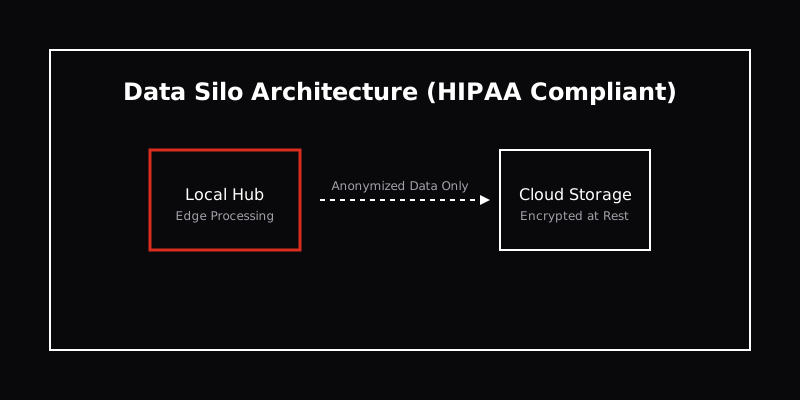
The transition from episodic care (doctor visits) to continuous remote monitoring represents a massive shift. The technology exists to track heart rate, blood oxygen, sleep quality, and bathroom frequency 24/7. But more data does not automatically equal better care.
The Signal-to-Noise Problem
When every fluctuation triggers an alert, the system fails. We evaluate Remote Patient Monitoring (RPM) platforms not on how much data they collect, but on their algorithmic ability to filter noise and flag genuine clinical deterioration.
Tool: Data Utility vs. Privacy Intrusion Matrix
Evaluate a proposed monitoring system to ensure the clinical value justifies the privacy impact.
How vital is this data for preventing hospitalization?
How invasive is the data collection? (10 = indoor cameras, 1 = monthly survey)
The clinical utility matches the privacy cost.
Frequently Asked Questions
Is this assessment vendor-neutral?
Yes. AgeTech Clinic accepts zero funding or hardware from vendors. All metrics are independently derived from published clinical data.
How often is this data updated?
We review the clinical landscape quarterly. If a new firmware update significantly alters device performance, we update our matrix immediately.
Deep Dive: Related Clinical Assessments
Explore our full matrix of technology evaluations. Each area focuses on distinct physical, cognitive, and architectural requirements for aging-in-place.
- Cognitive Health Tracking
- Cognitive App Matrix
- Mobility & Fall Prevention
- Radar Coverage Tool
- Remote Patient Monitoring
- Privacy vs Utility Check
- Smart Home Adaptations